


Is a Whole House Water Filtration System Worth It?
Clean water is something most homeowners take for granted until they notice an unpleasant taste, mineral buildup on fixtures, or stubborn stains around sinks and showers. While municipal water systems treat drinking water before it reaches residential properties, some homeowners want additional filtration to address specific water quality concerns.
A whole-house water filtration system is one option. These systems treat water as it enters the home, supplying filtered water to kitchens, bathrooms, laundry rooms, and other fixtures. But are they worth the investment? The answer depends on your water quality, household needs, and the type of filtration system you choose.
What Does a Whole-House Water Filtration System Do?
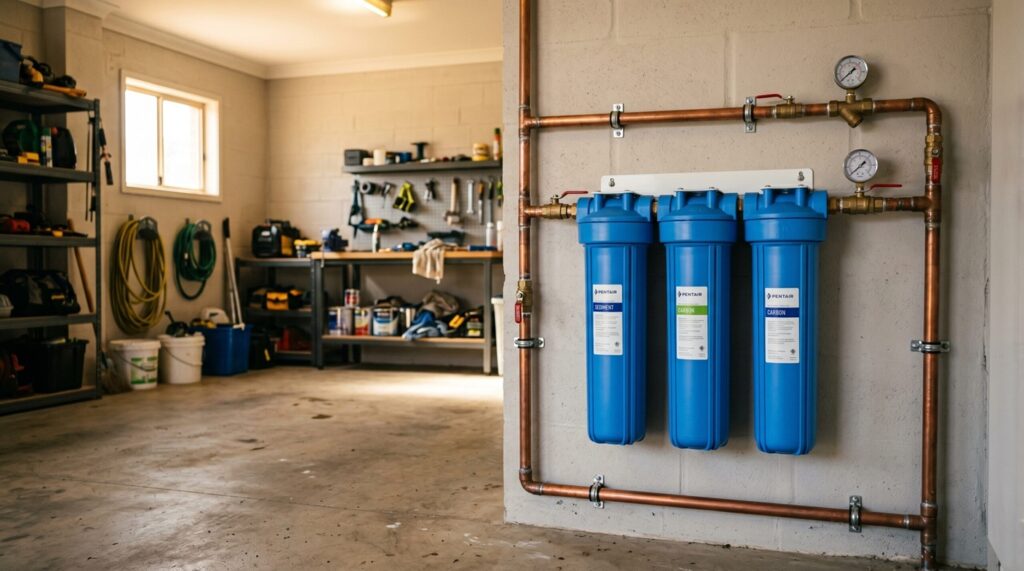
Unlike a pitcher or under-sink filter that treats water at a single location, a whole-house system is installed where the main water supply enters the property. Also known as a point-of-entry system, it treats water before it travels through the home’s plumbing.
Depending on the equipment, a whole-house water filtration system can reduce sediment, chlorine, certain chemicals, and other unwanted substances. Some systems also incorporate water softening technology to address hard water minerals such as calcium and magnesium. The important distinction is that not every filtration system removes the same contaminants. Homeowners should understand their water quality concerns before choosing equipment.
The Centers for Disease Control and Prevention (CDC) recommends testing water and selecting a filtration system based on the specific substances homeowners want to remove.
Whole-House Filtration vs. Under-Sink Water Filters
Not every home needs a filtration system that treats every gallon of incoming water. For households primarily concerned with drinking and cooking water, an under-sink filtration system may be a more practical and affordable option.
Under-sink filters treat water at a dedicated faucet, while whole-house systems supply treated water throughout the property. This makes whole-house filtration particularly useful when water quality concerns affect multiple fixtures or household activities.
For example, a homeowner dealing with sediment throughout the plumbing system may benefit from whole-house filtration. Someone primarily concerned about drinking water taste might accomplish their goals with a smaller point-of-use system.
The EPA WaterSense Guide to Selecting Water Treatment Systems provides a useful overview of these different approaches and explains when point-of-entry and point-of-use systems may be appropriate.
What Types of Water Problems Can Filtration Address?
Different filtration technologies are designed to address different water quality issues. Activated carbon filters are commonly used to improve taste and odor by reducing chlorine and certain other substances. Sediment filters capture particles such as sand, rust, and dirt before they enter household plumbing.
Reverse osmosis systems use a specialized membrane to reduce a variety of dissolved substances and are commonly installed for drinking water applications. Water softeners serve a different purpose by reducing minerals responsible for hard water.
The CDC’s guide to home water treatment systems explains the differences between filtration, reverse osmosis, distillation, ultraviolet treatment, and water softening.
How Much Does Whole-House Water Filtration Cost?
The cost of installing a whole-house water filtration system varies considerably depending on the equipment, plumbing configuration, and water quality issues being addressed.
Basic sediment filtration systems are generally less expensive than multi-stage filtration setups designed to address several water quality concerns. More advanced installations may require additional equipment, plumbing modifications, and professional installation.
The EPA notes that point-of-entry treatment systems generally cost several thousand dollars and may require ongoing professional maintenance. Homeowners should also consider replacement filters, periodic servicing, and any additional operating expenses when comparing systems.
Choosing the Right Water Filtration System for Your Home
Before investing in equipment, homeowners should identify what is actually in their water. Taste and smell alone are not reliable indicators of water quality, and buying an expensive filtration system without understanding the problem can result in unnecessary spending.
Start by reviewing your local water supplier’s Consumer Confidence Report if your home receives municipal water. These reports provide information about the source and quality of the public water supply. Private well owners should arrange appropriate laboratory testing to identify potential contaminants.
Next, compare filtration systems based on their specific contaminant reduction claims. Look for independent certifications from organizations such as NSF and verify that the certification applies to the substances you want to address. The CDC recommends checking certification labels and selecting equipment designed to remove the particular contaminants identified through testing.
Don’t Overlook Water Filter Maintenance
Installing a filtration system is only the beginning. Filters and other treatment components require regular maintenance to continue working properly. Depending on the system, homeowners may need to replace cartridges, clean components, replenish treatment media, or schedule professional servicing. Neglecting these tasks can reduce filtration performance and potentially create additional water quality problems.
Before purchasing equipment, ask the water filtration expert about recommended service intervals, replacement filter costs, warranty coverage, and the availability of replacement components. A system that looks affordable initially may become considerably more expensive if replacement parts are difficult to obtain or professional servicing is required frequently.
Is Whole-House Water Filtration a Good Investment?
For homeowners dealing with specific water quality problems throughout their property, whole-house filtration can be a worthwhile investment. It provides a centralized treatment solution and can address concerns affecting multiple household fixtures.
However, homeowners who simply want better-tasting drinking water may find that a smaller filtration system is sufficient. The smartest approach is to understand your water, identify the problems you want to solve, and compare equipment based on its actual capabilities.
Good Luck!
Publishing Opportunities for Home Service Companies
Home service companies looking to expand their online presence can also benefit from contributing to established home improvement website like The Rugged House. Through home services guest posts and relevant content placements, contractors and service professionals can share their expertise, reach new audiences, and build brand recognition. See our guidelines on guest posting and content creation on our contact page.
You Might Also Like